2026
German History Society Annual Conference 2026
University of Stirling
Thursday 3 September – Saturday 5 September 2026
REGISTRATION OPEN
The German History Society is pleased to announce that registration is open for its seventeenth Annual Conference. The 2026 conference will be hosted by the University of Stirling with confirmed keynote speakers: Maria Alexopoulou, John Breuilly and Len Scales. Annually, the Society invites historians of Germany from all parts of the world to present their research topics in German history broadly conceived, including the history of Germany and the German-speaking world in its broadest global context, from the medieval period to the present day.
Please use the hashtag #GermanHistSoc2026 on social media to keep engaged!
PGR and ECRs can also apply for a Bursary to attend the annual conference – for more information head to https://www.germanhistorysociety.org/postgraduate-ecr-funding/
For conference REGISTRATION, as well as booking details for ACCOMMODATION and DINNER please head to: https://www.stir.ac.uk/events/2025-2026/german-history-society-annual-conference/
If you have any questions about any local information, or any practical query, please contact Nikolaos Papadogiannis ([email protected]).
Programme
Thursday Afternoon Pre-Session
2–4pm (Lomond Room) GHS COMMITTEE MEETING
4–c.5.30pm (Lomond Room) GERMAN HISTORY EDITORIAL BOARD MEETING
4–c.5pm (Lomond Room) PUBLICATION WORKSHOP for postgraduates and ECRs with Neil Gregor (University of Southampton)
Thursday Evening
5 pm Registration opens
Stirling Court Hotel Foyer
Keynote Lecture 1
Peace at last in the Kyffhäuser? Living with medieval emperors in Germany since 1945
Len Scales (Durham University)
6pm – 7.15pm
Hermitage Iona Room
Chair: Mark Hewitson (UCL)
7.15pm Wine Reception
Friday Morning Session 9.15 – 11.15am
9.15-9.45am
Tea/Coffee
Hermitage Iona Room
Panel 1 – Animals and Material Worlds in Early Modern Germany
Chair: Karin Friedrich (University of Aberdeen)
Allanwater Room
Amelia Hutchinson (Deutsches Bergbau-Museum Bochum), ‘‘Ex ratione naturali’: Animal Specimens, Corporeal Wellness, and Natural Knowledge in Early Modern Art Cabinets’
Róisín Watson (The Open University), ‘Seventeenth-century Antlers and the Württemberg Court’
Holly Fletcher (UCL), ‘Multispecies Fats in an Early Modern Recipe: Baron Hans von Ungenad’s Salve’
Panel 2 – Urban Violence, Security and Paramilitarism
Chair: Mark Hewitson (UCL)
Lomond Room
Mathias Foit (Università degli Studi di Padova), ‘“As Few Guns in Society as Possible”: Gun Control in the German Reich, 1871–1945’
Paul Davy (Northumbria University), ‘Leisure Culture and Urban Violence in Newcastle upon Tyne and Bremen during the late 1920s’
Marcus Böick (University of Cambridge), ‘Private Security and the Modern State in Germany’
Désirée Hotz (King’s College London), ‘The Social Making of the Political Soldier: Masculinity, Kameradschaft, and Violence in the SA and SS’
Panel 3 – Time and Temporalities in Postwar Germany
Chair: Annalisa Martin (University of Glasgow)
Mull Room
Melina Mandelbaum (University of Cambridge), ‘Disrupting Socialist Time: Literature, Progress, and Temporal Citizenship in the GDR’
Clare Bielby (University of York), ‘Terrorist Time’ and Leftist Militancy in the Federal Republic of Germany
Charlotte Oakes (University of York), Situating Feminism in Time: Temporal-based Imaginaries and ‘Lag’ Discourse in West Germany’s Neue Frauenbewegung (1968–1979)
Panel 4 – Gender and Women in Germany
Chair: Maria Alexopoulou (TU Berlin)
Blairlogie Room
Jenna Byers (Dublin City University), ‘Not Like the Other Mädchen: Discrepancies in Hitler’s Views on Women’
Diane Röthlinger (University of Oxford), ‘Die Ostdeutschland? Gendered Imagining of East Germany and East Germans, 1989–91’
11.15am – 11.45am
Tea/Coffee Break
Hermitage Iona Room
Friday Morning Session 2: 11.45am – 1.15pm
Panel 5 – What’s a War Crime? The Norms of Extreme Violence during the Thirty Years’ War
Chair: Bridget Heal (University of St Andrews)
Allanwater Room
Harald E. Braun (University of Liverpool), ‘“Silent leges inter armas?” Extreme Violence and the Law during the Thirty Years’ War’
Michael Kaiser (Max-Weber-Stiftung), ‘Mercenaries, Peasants and Warlords: Extreme Violence in the Thirty Years’ War’
Thomas Pert (University of Liverpool), ‘“They plague and plunder us almost every day”: The Free Imperial City of Ulm and the ‘Normality of Violence’ in the Thirty Years’ War’
Panel 6 – From the First World War to the Weimar Republic
Chair: Emily Steinhauer (German Historical Institute London)
Lomond Room
Jasper Heinzen (University of York), ‘Prince Max von Baden, prisoner of war relief, and the royal international during the First World War’
Frank Lorenz Müller (University of St Andrews), “The Victorious March to the Crypt”? (Ex-)Royal Funerals and Monarchism in the Weimar Republic’
Anna Breidenbach (European University Instiute), ‘Regulating Fremdenverkehr. Politics of tourism and a new regime of mobilities in Germany, 1914–1923’
Panel 7 – Economic and Foreign Policy in the 20th Century
Chair: Benjamin Ziemann (University of Sheffield)
Blairlogie Room
Mairead Barrett (University College Dublin), ‘To Russia with love: Reversing German foreign lending policy between 1904 and 1906’
Larissa Kraft (Institute of Historical Research, University of London) Debating Franco-German Reconciliation and British EEC Membership: Adenauer, the Federal Foreign Office and Historically-inspired Visions of Europe, 1962–63
Panel 8 – Entangled Histories of Respectability, Rights, and Queerness after 1945
Chair: Anna McEwan (ZZF Potsdam)
Mull Room
Craig Griffiths (Manchester Metropolitan University), ‘There are no human rights without human duties’: The Queer Case of the Austrian Liga für Menschenrechte
Annalisa Martin (University of Glasgow): ‘Asociality’ and queerness in post-war West Germany
Nikolaos Papadogiannis (University of Stirling): HIV Activism in 1990s Germany: An Intersectional and Transnational Moment
13.30–14.30
Lunch
Friday Afternoon Session 1: 2.30pm – 4pm
Panel 9 – Nazism
Chair: Neil Gregor (University of Southampton)
Allanwater Room
Christian Hansen (Lund University), ‘The “Making” of Nazism: A Radicalization History of National Socialist Ideology’
Kathy Quinlan-Flatter, ‘Rudolf Hess – On A Mission Of Peace’
Linda Parker, ‘The flight of Rudolf Hess to Scotland in May 1941– confusion, conspiracy and consequences’
Panel 10 – Premises and Practices of Neighbourly Relations in Sixteenth-Century Germany
Chair: Róisín Watson (The Open University)
Lomond Room
Louisa Bergold (University of Oxford), ‘“Geschrey” and Neighbourliness: Rumour in a 1586 Incest Trial’
Niklas Groschinski (University of Oxford), ‘Good Fences Make Good Neighbours: Neighbourly Disputes about the Built Environment in Sixteenth Century Nuremberg’
Ryan Hampton (University of Oxford), ‘Neighbourhood Pressure, Neighbourly Practices, and the Formation of Action Groups in the German Peasants’ War of 1524–26’
Panel 11 – Cultural Transfer and Transnational Networks
Chair: Nikos Papadogiannis (University of Stirling)
Mull Room
Ruochen Zheng (Technische Universität Darmstad), ‘Regulation, Production, and Representation. Organizing Colonial Space through Residential Architecture in Tsingtau (Qingdao), 1897–1919’
Theodor Karakolev (Academy of Music, Dance and Fine Arts, Plovdiv), ‘Bulgarian women students of architecture in Interwar Germany – challenges, opportunities and accomplishments’
Malvika Singh (Indian Institute of Technology Bombay, India), ‘The Postwar Transformations of German Cultural Diplomacy in India: The Goethe-Institut–Max Mueller Bhavans, Transnational Networks, and Cultural Programming (1960s–Present)’
Panel 12 – Work and Life in the Postwar Era
Chair: Mark Hewitson (UCL)
Blairlogie Room
Mathis Gronau (Institut für Soziale Bewegungen, Ruhr-Universität Bochum), ‘Losing the Thread? The Role of A City’s Identity in Dealing with Deindustrialization – A Franco-German Comparison’
Rory Hanna (University of Sheffield), ‘The Workers of the Future: Contestations over Vocational Education in Cold War Germany’
4pm – 4.30pm
Tea/Coffee Break
Hermitage Iona Room
Friday Afternoon Session 2: 4.30pm – 6pm
Panel 13 – Occupation in Germany
Chair: Charlie Knight (University of Southampton)
Lomond Room
Leonie Bausch (University of Nottingham), Voyeurism and the Visibility of Sex in Post-WW2 Occupied Germany
Félix Streicher (Sciences Po Centre for History), ‘Occupied Spaces: Everyday Life and Social Interactions in the Luxembourg Occupation Zone in Germany (1945–55)’
Beverly Mary-Ann Fietzek (LMU Munich), ‘Jewish Children’s Camps in the U.S. Occupation Zone of Germany’
Panel 14 – Mining and Religion in Early Modern Northern Europe
Chair: Róisín Watson (The Open University)
Blairlogie Room
Bridget Heal (University of St Andrews), ‘“The Wonders of God and of Nature”: reading the book of nature in Saxony’s Erzgebirge’
Mirjam Hähnle (German Historical Institute London), ‘Mining, Matter, and Faith in the 17th Century German Lands’
Amelia Hutchinson (Deutsches Bergbaumuseum), ‘Cosmic (dis)harmony: Extraction and Precarious Nature in the Kingdom of Hungary’
Panel 15 – Internationalism and Solidarity in the GDR
Chair: Katharina Pruente (University of Stirling)
Allanwater Room
Margaret McCool (Indiana University), ‘“Solidarity was needed!” East Germany’s Human Rights Campaign Begins, 1959–1969’
Johan Hjelte (University of Gothenburg), ‘The study of East German anti-apartheid campaigning, a global history approach’
Rebecca McClung (University of Massachusetts Amherst), ‘From Exile to Insider: Lea Grundig and the Politics of Memory in the GDR’
Panel 16 – Identities and the Other
Chair: Craig Griffiths (Manchester Metropolitan University)
Mull Room
Lynn van Els (University of Aberdeen), ‘Constructing a Weimar Trans Identity: Intersectional Exclusion and Editorial Control in Das 3. Geschlecht’
Lior Tibet (University College Dublin), ‘Violence from Afar: Sensory Memory in Jewish Child Survivor Testimonies’
Les Newsom (UCL), ‘Learning about the enemy: German national identity in British Childhoods, 1904–1918’
Keynote Lecture 2
Anticipating Nationalism Studies: Voices from the Early 20th Century
John Breuilly (London School of Economics)
6.15–7.30pm
Hermitage Iona Room
Chair: Mark Hewitson (UCL)
Conference Dinner at Stirling Court Hotel Restaurant
7.45pm
Saturday Morning Session 8.30am – 10.30am
8.30am – 9am
Tea/Coffee
Hermitage Iona Room
Panel 17 – Concentration Camps
Chair: Paul Moore (University of Leicester)
Allanwater Room
Karianne Hansen (United States Holocaust Memorial Museum), ‘Debates on the Early Concentration Camps: The Translation and Reception of Werner Schäfer’s Anti-Brown-Book in Norway, 1934-1935’
Lewis Champion (Royal Holloway, University of London), ‘Pink Triangle Prisoners at Natzweiler-Struthof’
Marketa Kroupová (Charles University), ‘The Making of a Cultural Leader in the Buchenwald Concentration Camp’
Panel 18 – Workers, Welfare and Opposition in German History
Chair: Craig Griffiths (Manchester Metropolitan University)
Lomond Room
Ziga Oman (University of York), ‘Pardon My Feud: Plebeian Enmities and Their Control in the Early Modern Prince-Bishopric of Würzburg’
Bethany McNamara-Dale, ‘Scarcity and the State: Hungersnot and Welfare Reform in the German Confederation’
Alex Beard (University of Oxford), ‘Rudolf Bahro, Petr Uhl, and the Green Afterlives of Red Opposition’
Panel 19 – Exile, Exclusion and Memory
Chair: Emily Steinhauer (German Historical Institute London)
Mull Room
Aileen Lichtenstein (Northumbria University), ‘Nostalgia in radical German exile politics of the nineteenth century’
Charlie Knight (University of Southampton), ‘Reconciling Absence: Incompleteness in the Archives of German-Jewish Refugees’
Nathan Halder (Purdue University), “Contested Belonging: Russian-Germans and the Exclusionary Politics of War Memory in the Federal Republic, 1985–2000”
Panel 20 – 20th Century Intellectual History
Chair: Nikolaos Papadogiannis (University of Stirling)
Blairlogie Room
Petar Ćurčić (Institute of European Studies, Belgrade), ‘Werner Sombart, Capitalism, and the Imperialism Debate: Between Imperialists and the Marxists’
Thomas Glasman (University of Oxford) ‘“Diese Ordnung ist nicht haltbar in sich!”: The Foundational Crisis of Mathematics as a Crisis of the Weimar State’
10.30-11am Tea/Coffee Break
Hermitage Iona Room
Saturday Morning Session 2: 11am – 12.30pm
Keynote Lecture 3
Precarious Non-/Belonging: Racism, Democracy and History in German Immigration Society
Maria Alexopoulou (TU Berlin)
11.15am – 12.30pm
Hermitage Ioana Room
Chair: Nikolaos Papadogiannis (University of Stirling)
12.30-1.30pm Lunch
1.30pm – Annual General Meeting of the German History Society
Hermitage Iona Room
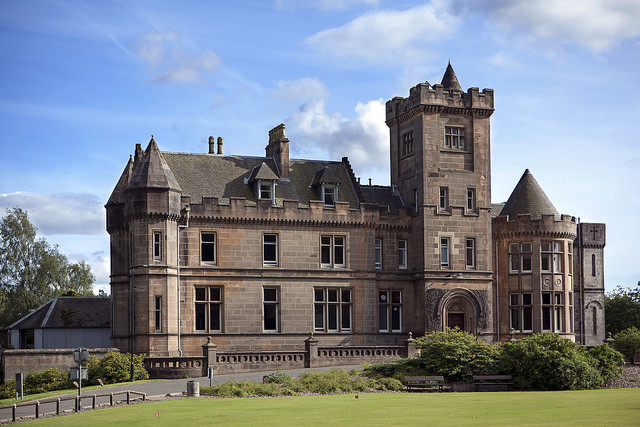
Photo: Wikimedia, CC-BY-SA-4.0